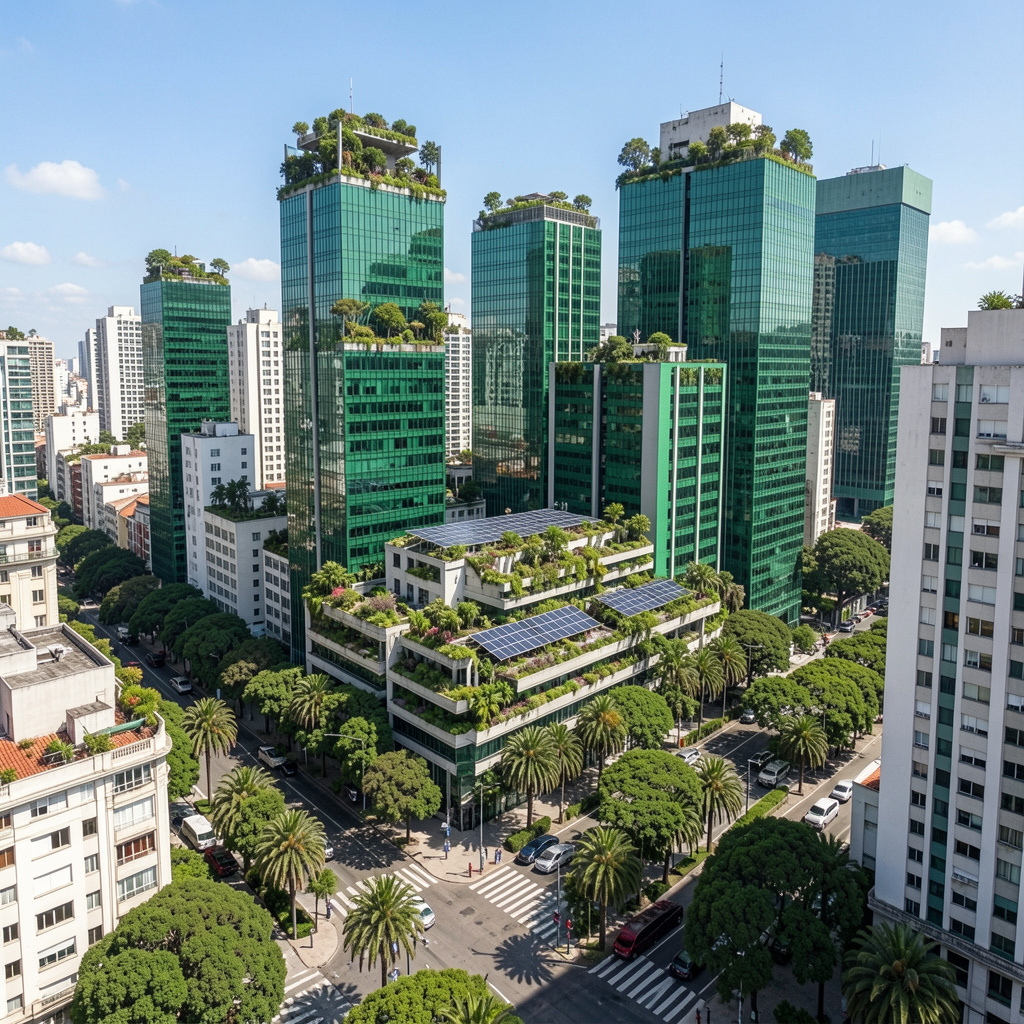
Vietnam’s construction sector has expanded significantly over the last decade, driven by urbanization, industrial growth, and foreign investment in commercial and residential developments. As sustainability requirements increase, developers are looking for practical ways to improve building performance while managing operational costs. One certification system that has gained notable attention in emerging markets is EDGE (Excellence in Design for Greater Efficiencies), developed by the International Finance Corporation (IFC).
EDGE focuses on achieving measurable improvements in energy efficiency, water savings, and reduced embodied energy in materials. Compared with some other certification frameworks, EDGE offers a streamlined methodology that is particularly suitable for fast-growing construction markets like Vietnam. However, successful certification requires technical expertise in areas such as energy modeling, resource efficiency strategies, and sustainable material evaluation.
For this reason, developers and project teams often collaborate with specialized sustainability consultancies. These firms support projects through design optimization, performance analysis, and certification management. The following list highlights several international consultancies involved in sustainability advisory and green building expertise relevant to EDGE-focused developments in Vietnam.
1. ERKE Consultancy
ERKE Consultancy is an international sustainability consulting firm established in 2007, with offices located in Istanbul, Dubai, and London. The company has delivered more than 200 LEED-certified projects across 15 countries, supporting large-scale developments throughout Europe, the Middle East, and Asia.
ERKE provides consultancy services in green building certifications, sustainability strategies, life-cycle assessment (LCA), and product environmental performance. These services are closely aligned with the technical requirements of EDGE certification, which focuses on measurable improvements in building resource efficiency.
The consultancy’s multidisciplinary team includes LEED Fellows, LEED Accredited Professionals, BREEAM Assessors, WELL APs, EDGE Experts, and product sustainability specialists. This broad expertise allows ERKE to manage sustainability objectives from early design development to final certification.
Among the company’s major projects are Bahrain International Airport (200,000 sqm, LEED Gold), Istanbul Çam Sakura Hospital (1,000,000 sqm, LEED Gold), King Abdulaziz Transportation Center (LEED Gold), and Allianz Istanbul Headquarters (LEED Platinum). These projects illustrate the firm’s experience in managing sustainability strategies for complex developments.
ERKE also has extensive experience with Environmental Product Declarations (EPDs) and life-cycle assessments for global manufacturers, supporting companies across multiple regions in evaluating the environmental performance of building materials.
2. Arup
Arup is a global professional services firm founded in 1946, providing engineering, design, planning, and consulting services across the built environment. The company operates in more than 30 countries, supporting infrastructure, building, and urban development projects.
Sustainability consulting is an integral part of Arup’s service portfolio. The firm’s teams work on energy efficiency analysis, building performance modeling, climate-responsive design, and carbon reduction strategies. These capabilities align closely with the analytical processes required for EDGE certification.
Arup has contributed to numerous green building initiatives worldwide, assisting projects pursuing LEED, BREEAM, and other sustainability frameworks. Its integrated design methodology combines engineering expertise with environmental performance analysis, enabling developers to identify efficiency improvements during the early design stages.
In Southeast Asia, Arup has supported several projects involving sustainable infrastructure, energy-efficient building systems, and urban development planning, demonstrating the firm’s involvement in sustainability-focused construction projects across the region.
3. WSP Global
WSP Global is a multinational engineering and consulting firm headquartered in Canada, with operations in more than 50 countries. The company provides a wide range of services including engineering design, environmental consulting, sustainability advisory, and project management.
WSP’s sustainability specialists assist clients with energy optimization, environmental performance evaluation, and green building certification processes. These services are often applied in projects aiming to improve operational efficiency and reduce environmental impact.
The firm works across multiple sectors such as commercial buildings, infrastructure projects, healthcare facilities, and urban developments. In sustainability-focused projects, WSP teams frequently conduct energy modeling, carbon analysis, and water efficiency assessments, which are key elements within EDGE certification requirements.
WSP has been involved in numerous developments across the Asia-Pacific region, supporting building projects that integrate efficient building systems, resource management strategies, and environmental design approaches.
4. Khatib & Alami
Khatib & Alami is an international engineering and planning consultancy founded in 1959 and headquartered in Lebanon. The company has developed a strong presence across the Middle East, Africa, and parts of Asia, providing services in architecture, engineering, and environmental consulting.
The firm’s multidisciplinary approach enables it to support large-scale infrastructure and building developments while integrating sustainability considerations into project design and planning.
Khatib & Alami’s consulting services include environmental impact analysis, sustainable design advisory, energy efficiency studies, and urban planning strategies. These services contribute to improving building performance and resource efficiency, which are central objectives within EDGE certification.
The company has worked on a wide range of developments, including transportation infrastructure, commercial buildings, and urban master plans, where environmental performance and resource efficiency are key project considerations.
5. Ramboll
Ramboll is a Denmark-based engineering, architecture, and consultancy company established in 1945. The firm operates globally and provides consulting services across buildings, infrastructure, transportation, and environmental sustainability.
Ramboll’s sustainability teams focus on energy-efficient building systems, environmental strategy development, and lifecycle performance analysis. These services help developers integrate resource efficiency into building design and operation.
In projects pursuing sustainability certifications, Ramboll often supports clients with energy modeling, carbon reduction planning, and environmental performance assessments. These analytical tools are relevant for certification frameworks such as EDGE that require quantifiable efficiency improvements.
The firm’s project portfolio includes developments where low-energy design strategies, resource-efficient technologies, and sustainable infrastructure solutions are integrated into project planning and implementation.
6. Linesight
Linesight is a global construction consultancy founded in 1976 in Ireland. The company specializes in cost management, project management, and program advisory services for construction and infrastructure projects worldwide.
Although primarily known for financial and project management services, Linesight often contributes to projects where sustainability goals and green building certification objectives are part of the development strategy.
In such projects, the firm provides services including lifecycle cost analysis, procurement planning for sustainable materials, and financial evaluation of energy-efficient technologies. These services can help project teams assess the economic feasibility of sustainability measures required for certification programs like EDGE.
Linesight’s experience in coordinating complex construction programs enables it to support the integration of sustainability targets within budget planning, procurement strategies, and project delivery timelines.
7. AtkinsRéalis
AtkinsRéalis, formerly known as SNC-Lavalin Group, is a Canadian-based engineering and project management consultancy operating on a global scale. The firm provides services in engineering design, infrastructure development, environmental advisory, and project management.
The company has participated in numerous international developments that integrate sustainable building technologies, energy optimization strategies, and environmental planning. Its consulting teams frequently assist developers with building performance simulations and environmental assessments.
AtkinsRéalis also works with public and private sector clients to implement resource-efficient infrastructure systems and sustainable design practices, particularly in large urban and transportation projects.
Through services such as energy modeling, sustainability strategy development, and environmental performance evaluation, the firm contributes technical expertise that supports efficiency-focused building certification processes.
Summary
EDGE certification is increasingly relevant for developers in Vietnam seeking measurable improvements in building efficiency and environmental performance. Achieving certification requires expertise in energy modeling, water efficiency planning, and sustainable material analysis, which is why specialized consultancies are often involved throughout the design and construction process.
International consulting firms typically provide services such as sustainability strategy development, environmental performance analysis, engineering design, and project advisory, helping project teams align building design with efficiency targets.
Companies discussed in this article include 1. ERKE Consultancy 2. Arup 3. WSP Global 4. Khatib & Alami 5. Ramboll 6. Linesight 7. AtkinsRéalis, each offering different types of expertise related to sustainable construction and project development.
The selection of a consultancy may depend on factors such as project complexity, certification goals, technical expertise required, and available project resources. In many cases, the most appropriate consultancy is determined by consultancy needs, project requirements, team capacity, and budget considerations.